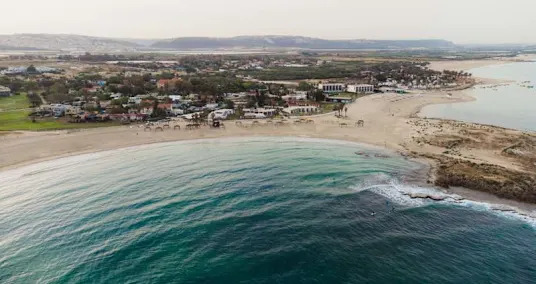
The discovery was made in an ancient shipwreck in the Dor Lagoon near the Carmel Coast, where archaeologists recovered nine pieces of unprocessed iron known as “blooms.”
Researchers from the University of Haifa said Wednesday that an underwater excavation off Israel’s northern Mediterranean coast uncovered what they described as the earliest known cargo of raw iron transported by ship, dating back around 2,600 years, Xinhua reported.
The discovery was made in an ancient shipwreck in the Dor Lagoon near the Carmel Coast, where archaeologists recovered nine pieces of unprocessed iron known as “blooms.” According to the university, the find provides direct evidence of how iron was transported in its earliest commercial stages.
The material was preserved in its original form, having solidified directly in a smelting furnace without undergoing forging or further refinement. Researchers said this distinguishes the cargo from later iron artifacts that typically show signs of shaping or tool-making.
Unlike copper and bronze, which could be melted into liquid form in ancient production processes, iron was heated with charcoal to produce a solid, porous mass. That mass was generally hammered to remove impurities and create denser material suitable for tools and implements.
The recovered blooms showed no indication of that secondary processing stage, suggesting they were transported immediately after production.

Earliest iron shipment discovered in ancient Mediterranean wreck
To determine the age and condition of the cargo, researchers conducted microscopic and chemical analyses.
Radiocarbon dating was also carried out on charred wood embedded in one of the pieces, helping confirm the timeline of the shipment. The findings were published in the journal Heritage Science.
Researchers said the cargo indicates that iron was being moved in raw form from production sites to other locations for further processing, pointing to a level of specialization in ancient manufacturing and trade networks in the Mediterranean.
The University of Haifa said the discovery provides new insight into early iron production and distribution practices in the region.
LATEST POSTS
- 1
 Find the Interesting Universe of Computerized reasoning: the Capability of man-made intelligence
 - 2Living in the dark: Gaza’s struggle for electricity
- 3Novo Nordisk gears up for December Ozempic launch in India, sources say
- 44 Must-Visit bar-b-que Eateries This Year
- 5EU chief urges Iran to free imprisoned protesters, lift internet ban




- Police arrest 18 as anti-war protests spread across Tel Aviv, Haifa, Jerusalem
- Manual for 6 Busssiness Class Flights
- Figure out How to Use the Experience of a Fender bender Legal counselor for Your Potential benefit
- Canada's Friendly Sunshine Coast City Is An Outdoor Playground Perfect For Hiking And Paddling
- Horses really can smell our fear, new study finds
- Passenger Missing After Going Overboard Disney Cruise Ship
- Fossils unearthed in Morocco are first from little-understood period of human evolution
- Photos of amputees in Gaza, struggling to survive after losing limbs to Israeli airstrikes
- 'The best gift ever': Baby is born after the rarest of pregnancies, defying all odds