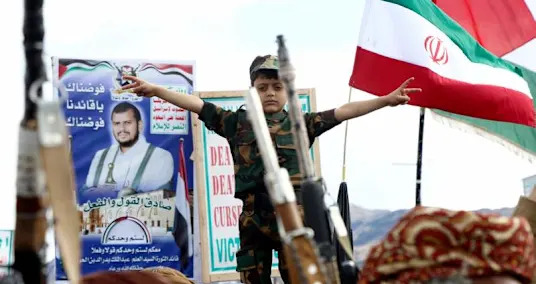
The Houthis successfully hid missiles in caves for years, and the US, Israel, Saudi Arabia, and others were not able to stop the missile and drone attacks or dislodge the group.
When the US and Israel began attacks on Iran on February 28, the Iranians had many choices on how to respond. They began to target Israel and the Gulf states with missiles and drones. Three days after the attack, they also encouraged Hezbollah to strike Israel. In addition, they operationalized Iranian-backed militias in Iraq to carry out attacks.
The Iranian response has been complex. Thousands of drones and missiles have targeted the Gulf countries. In total, Iran has targeted a dozen countries and closed the Straits of Hormuz. The majority of Iranian attacks have struck the Gulf, primarily the UAE.
In addition, the Iranian-backed militias in Iraq have carried out around 500 attacks on targets in Iraq. These include the US Embassy in Baghdad, the US consulate in Erbil, Kurdish forces and groups in the Kurdistan Region, and the UAE consulate in Erbil.
With the war spreading to Iraq and Lebanon, and Iran feeling it holds the cards in Hormuz, Tehran waited to encourage the Houthis to move to the offensive. Iran has been seeing signs that the US wants the war to end. It also knows the US is moving forces to the region to potentially invade Iranian islands.
While the US says it has passed notes to Iran via Pakistan to secure a possible ceasefire, Iran does not trust the US. It believes that the US misled Iran about previous rounds of talks, using them to gather US air power in the region to carry out attacks. Iran believes the US purposely tricked Tehran and lied to it during negotiations, and that the US always had plans to carry out a surprise attack.

In Iran’s view, it is the victim, but it also seeks to demonstrate its power in the region. Having kept the Straits of Hormuz closed, it knows pressure is building to reopen the waterway. The Houthis's joining the conflict a month after it began will show that Iran can spread the conflict to the Red Sea, potentially. This will create more complexity for the US and US air power in the region.
The US and Israel have not been able to stop the Houthis in the past. In fact, the US conducted airstrikes in March 2025 but eventually concluded they offered diminishing returns. As such, Iran believes the US and Israel will have trouble dealing with the Houthis.
Iran's 'ring of fire' strategy
Iran and the Houthis believe that creating a “ring of fire” in the region that stretches from Lebanon via Iraq and the Gulf to Yemen, several thousand miles of frontline, will enflame the region and show the US that this war was a mistake.
They want to show that the attack on Iran, carried out as talks were underway, will not end easily for the US. Iran wants to show that it will not only absorb blows but also strategically expand the conflict.
The Houthis represent a broader strategy for Iran, potentially affecting a new global shipping lane via the Red Sea. With the world already on edge about the Hormuz closure, this new front could spook the global economy.
Iran knows, and the Houthis know, that they don’t have to do much to threaten the Red Sea; all they have to do is make it seem that there is a threat. While Israel has also had a Red Sea strategy, supporting Somaliland, the Iranian answer via the Houthis is a new card that has been put into play.
Saudi Arabia fought the Houthis for more than five years from 2015 to 2020, but saw that this was a difficult war in the mountainous terrain of Yemen. Riyadh and the UAE had a falling out over the Yemen strategy. As such, the Houthis have already outplayed countries in the region.
Iran knows this and believes that, like the Houthis, Iran can succeed despite setbacks. The Houthis successfully hid missiles in caves for years, and the US, Israel, Saudi Arabia, and others were not able to stop the missile and drone attacks or dislodge the group.
LATEST POSTS
- 1
 Jubilant FoodWorks to scrap Dunkin’ franchise arrangement in India
 - 2The German series proving subtitles can be sexy — and wildly addictive
- 3Extraordinary Picks for Home Apparatuses: Making Life Simpler
- 4Ancient meditation practices find new life in modern religious communities across America
- 5Lilly, Novo lock horns in India's obesity drug race





- Winter storms blanket the East, while the U.S. West is wondering: Where’s the snow?
- Israeli naval intelligence reduces Iranian threat to Strait of Hormuz
- Heartfelt Objections to Visit with Your Adored One
- Dark matter may be made of pieces of giant, exotic objects — and astronomers think they know how to look for them
- NASA begins fueling rocket to launch astronauts on the first lunar trip in half a century
- Doctors thought he had cancer. An offhand suggestion led to a rare diagnosis.
- Alix Earle built trust by sharing her acne woes. Now her skin care line is raising questions.
- Manual for Tracking down the Immaculate Magnificence of Focal Asia
- NASA's Apollo 8 moonshot saved 1968. Could Artemis 2 do the same in 2026?