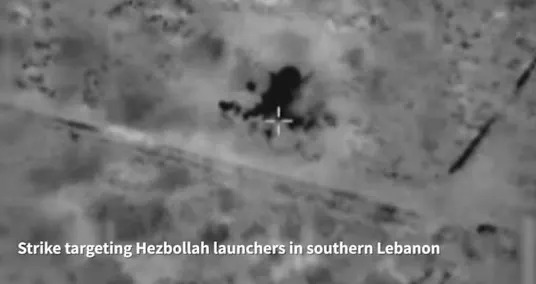
In 22 locations in the Golan Heights, the time will be extended from "immediate" to 15-30 seconds, depending on the town.
Beginning at noon on Tuesday, the IDF's Home Front Command will extend the time civilians have to reach shelter from the moment a siren sounds for rockets launched by Hezbollah in Lebanon toward Israel, the military announced on Monday.
In 22 locations, the time will be extended from "immediate" to 15-30 seconds, depending on the town. In another 14 areas, the time will be extended from 15 seconds to either 30 or 45 seconds. In eight areas, they will extend from 30 to 45 seconds, and in a further five, there will be no change.
At the five locations with no change, citizens have either 15 seconds or a full minute to find shelter after a siren sounds.
All 49 areas are in the Golan Heights or the Jordan River Valley area.
Most notable is at the Lebanese border, where sirens would sound 15 seconds before residents need to reach a safe space. Currently, there is no time from the moment a siren sounds to the moment residents need to take cover, and in many instances, Israelis hear the interception of missiles before a siren sounds. This includes the Druze town of Majdal Shams was among those listed, nearly two years after Hezbollah launched an Iranian-made rocket toward the town, killing 12 children playing outside.

"Changing [these] times expresses the paramount importance we place on the protection of human life," Home Front Command Chief Maj.-Gen. Shay Klepper said on Monday. "The change in the northern communities in the Golan Heights and the Jordan Valley is...part of a constant process of learning and adapting to operational reality."
"Extending the [siren response] times...will allow residents to be better prepared during an emergency," Klepper explained.
Hezbollah fires intense barrages of rockets towards Israel, IDF
In late March, Hezbollah fired over 600 times on Israel and IDF troops within a 24-hour period, doubling its prior high of around 300 aerial threats during the 2023-2024 conflict between the sides, IDF sources confirmed on March 27.
This major spike in Hezbollah attacks, up from a general average of around 100 attacks per day during the current war, occurred in the shadow of a possible end to the Israel-Iran war.
Since then, Israel's North has been bombarded daily and nightly with rockets and drones from Hezbollah in Lebanon, with some locations receiving alerts 6-8 times a day.
James Genn and Yonah Jeremy Bob contributed to this report.
LATEST POSTS
- 1
 5 Eating routine Well disposed Snacks to Keep You Fulfilled
 - 212 times rockets and spacecraft crashed and burned in 2025
- 3Phonetic Associations: A Survey of \Interfacing Worldwide People group\ Language Trade Application
- 4A Texas GOP congressman is retiring. Trump just endorsed his identical twin to replace him.
- 55 Destinations Where Airfare Is Dropping The Most For Spring 2026, Per Dollar Flight Club Analysis



- James Webb Space Telescope spies mysterious high-energy radiation in star nursery
- HR exec caught on Coldplay 'kiss cam' with boss finally breaks her silence: 'I made a bad decision and had a couple of High Noons'
- WATCH: IDF strikes, dismantles missile launchers in southern Lebanon
- Oprah Winfrey's Favorite Wellness Destination Is A Luxurious Italian Retreat
- Decrease in Home Buy Credits and Home loan Renegotiating Rates: An Outline of Latest things
- Focus on Yourself: Wellbeing and Taking care of oneself Practices
- US FDA panel to weigh bid to market nicotine pouches as lower-risk than cigarettes
- These 2 moon rovers used cameras and lasers to hunt for simulated water ice — and one looks like WALL-E
- Which camera do you believe is great for first-time clients? !